
 EN
EN



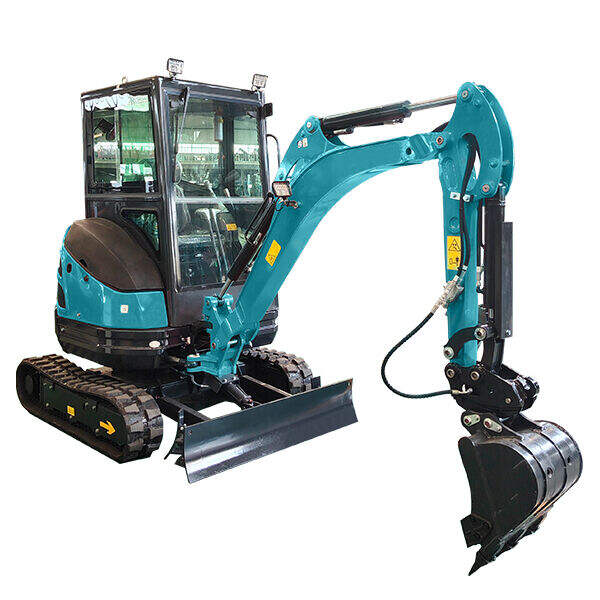
Why Maintenance Directly Determines Electric Mini Loader ROI
An electric mini loader purchased for 25,000 that operates reliably for 8 years costs approximately 3,125 per year. The same loader neglected on maintenance — battery replaced at year 3, hydraulic pump rebuilt at year 4 — costs far more per productive hour. Maintenance is the single variable determining whether an electric mini loader delivers the ROI its specification sheet promises.
Battery Life, Hydraulic Health, and Undercarriage Wear
Three systems determine an electric mini loader service life: the lithium-ion battery pack, the hydraulic system powering the lift arms, and the undercarriage with drive components. Battery replacement represents the largest single expense — 4,000 to 8,000. Hydraulic pump failure costs 2,500 to 5,000 in parts and labor. Track or tire replacement runs 800 to 2,000. A maintenance program addressing all three extends each component's life by 30% to 50%, directly improving total cost of ownership.
Real-World Case — A Landscaping Fleet Extends Battery Life by 40%
A UK landscaping company operating six electric mini loader units for material handling on residential projects experienced battery degradation averaging 20% capacity loss after 18 months — far faster than the expected 80% retention at 3 years. Investigation revealed two practices shortening battery life: operators were leaving batteries at full charge overnight — lithium-ion cells degrade significantly faster when stored at 100% state of charge — and deep-discharging to below 10% before recharging, which stresses the cell chemistry. The company implemented a new charging protocol: charge to 80% for overnight storage, top up to 100% only immediately before the next shift, and always recharge when the battery indicator reached 20% — never below 10%. Jining Aide Machinery, manufacturing electric compact equipment with CE and ISO 9001 certification and a monthly production capacity of 2,000 units, provided the charging protocol documentation as part of the operator training package. After 24 months following the new protocol, battery capacity retention stabilized at 92% — a degradation rate of approximately 4% per year versus the previous 13% annually.
Daily and Weekly Maintenance Checklist
Battery Protocol, Fluid Checks, and Visual Inspection
Daily maintenance for an electric mini loader takes 10 minutes: verify battery level and confirm charger disconnection — a fault overcharging the battery destroys cells within days. Check hydraulic fluid at the sight glass with lift arms lowered — low fluid indicates a leak. Perform a visual walk-around: inspect tires or tracks for damage and proper tension, confirm safety decals, test emergency stop. Weekly maintenance adds 20 minutes: clean the battery compartment of dust causing terminal corrosion, grease all lift arm pivot points, and check hydraulic hoses for abrasion or weeping at fittings.
Battery Care for Maximum Cycle Life
Charge Cycles, Depth of Discharge, and Temperature Management
Lithium-ion batteries in an electric mini loader are rated for 2,000 to 3,000 cycles to 80% remaining capacity — assuming 80% depth of discharge. Discharging to 5% or 0% can reduce cycle life by 40%. The optimal range: recharge at 20%, stop at 90% for daily use, charge to 100% only when full runtime is needed. Temperature management matters equally: charging below 0°C causes permanent lithium plating; operating above 45°C accelerates electrolyte degradation. Store in shaded or covered parking — direct sun raises battery compartment temperature 15°C above ambient.
Hydraulic System and Structural Maintenance
Oil Quality, Filter Replacement, and Pin/Bushing Lubrication
Hydraulic oil in an electric mini loader should be sampled annually for particle count, water content, and viscosity analysis. Oil that appears milky or cloudy contains water — the system has a breather leak or condensation issue that must be addressed before the water content causes pump cavitation damage and valve corrosion. Hydraulic filters should be replaced per the manufacturer's interval — typically every 500 operating hours — and more frequently in dusty or sandy environments where airborne particles enter through the hydraulic tank breather. Grease all pivot pins and bushings on the lift arm linkage, attachment coupler, and any oscillating axle pivots every 50 hours — or every 25 hours in wet or dusty conditions. A pin left to run dry wears the bushing bore, creating play that increases with each operating hour; replacing a 5 bushing during scheduled maintenance is vastly cheaper than replacing a 500 hardened pin and the $200 structural component it mounts to after the bushing has ovaled.
Frequently Asked Questions
How often should an electric mini loader battery be charged?
Charge an electric mini loader when the battery reaches 20% — never below 10%. For overnight storage, charge to 80%. Top to 100% only immediately before use. Jining Aide Machinery provides charging documentation with every loader.
How long do electric mini loader batteries last?
A properly maintained electric mini loader lithium-ion battery lasts 2,000 to 3,000 cycles — 5 to 8 years at one cycle daily. Deep discharging below 10% and storing at 100% charge can halve this service life.
What hydraulic maintenance does an electric mini loader need?
An electric mini loader needs annual oil sampling, filter replacement every 500 hours, daily fluid level checks, and weekly hose inspection. Milky oil indicates water contamination requiring immediate attention before pump damage occurs.
How often should pins and bushings be greased?
Grease all pivot points on an electric mini loader every 50 operating hours — every 25 hours in dusty or wet conditions. A dry pin wears the bushing, creating play that accelerates wear across the entire linkage.
What daily checks should be performed before operation?
Daily checks on an electric mini loader take approximately 10 minutes: verify battery charge, check hydraulic fluid at the sight glass, inspect tires or tracks, confirm safety decals, and test emergency stop function.
How does temperature affect electric mini loader battery life?
Charging an electric mini loader battery below 0°C causes permanent damage. Operating above 45°C degrades the electrolyte. Store in shaded parking — direct sun raises internal battery temperature significantly above ambient.