
 EN
EN



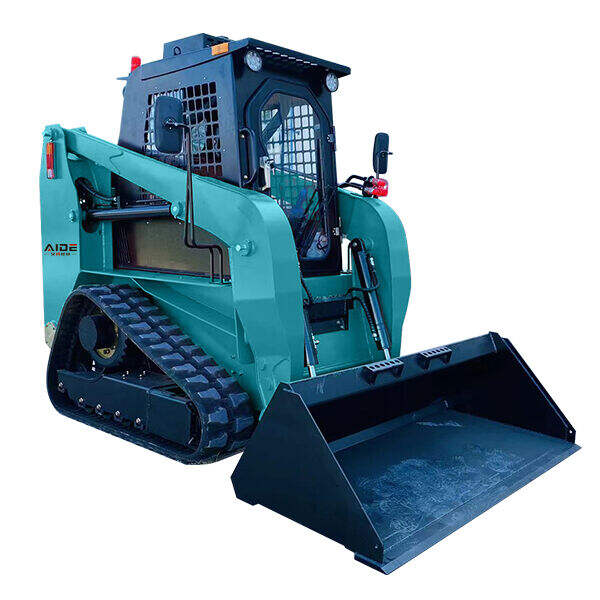
Hydraulic System Upgrades for Faster Cycle Times
A compact wheeled loader spends 60% to 70% of its cycle on hydraulic movements — lifting, tilting, lowering, dumping. The difference between a 12-second and an 8-second bucket cycle translates to 53 minutes of recovered productive time across 800 daily cycles. Hydraulic upgrades deliver the fastest payback of any loader improvement.
High-Flow Auxiliary Hydraulics and Load-Sensing Valve Technology
Two hydraulic upgrades produce measurable cycle-time improvement on a compact wheeled loader. A high-flow auxiliary circuit — 80 to 120 L/min versus the standard 50 to 65 L/min — powers attachments demanding continuous flow: rotary brooms, cold planers, snow blowers, mulching heads. A load-sensing hydraulic system replaces a fixed-displacement gear pump with a variable-displacement piston pump that adjusts to actual demand. During travel between pile and truck, the pump destroke s to near-zero flow, reducing parasitic power loss by 15% to 25% and cutting fuel consumption by 8% to 12%. A fixed-displacement pump circulates full system pressure through the relief valve during travel — generating heat, wasting fuel, and shortening oil life.
Real-World Case — A Landscaping Contractor Upgrades Its Fleet
A commercial landscaping company operating six compact wheeled loader units across suburban residential and municipal projects was averaging 11-hour daily runtime per machine at 8.5 L/h fuel consumption. Two of the six loaders lacked high-flow hydraulics and could not run the contractor's rotary broom attachment — instead, manual sweeping crews followed the loader, adding 1.5 labor hours per site. JNADJX (Jining Aide Machinery Equipment), a manufacturer with CE and ISO 9001 certification producing 2,000 units monthly for European, North American, and South American markets, supplied replacement loaders with load-sensing piston pumps and standard high-flow auxiliary circuits. Fuel consumption dropped to 7.2 L/h. The two underpowered machines were reassigned to material-handling-only duties. Manual sweeping hours decreased by 70%. The contractor recovered the upgrade cost differential in 10 months through fuel savings and labor reduction.
Attachment Versatility — One Machine, Multiple Jobs
Hydraulic Quick Coupler, Skid Steer Compatibility, and Attachment Presets
A compact wheeled loader with a pin-on bucket is a one-function machine. Adding a hydraulic quick coupler — operated from the cab without leaving the seat — converts it into a multi-function platform. The operator switches from a general-purpose bucket to pallet forks, a grapple bucket, or a snow blade in under 30 seconds. Skid steer attachment plate compatibility expands the attachment catalog from a few loader-specific implements to thousands of standard attachments available from multiple manufacturers. Machines with electro-hydraulic controls store attachment-specific flow-rate and response presets — the operator selects "rotary broom" on the display, and the system automatically adjusts auxiliary flow rate and loader-arm response sensitivity to the preset values for that attachment. This eliminates the trial-and-error adjustment that wastes 5 to 10 minutes per attachment change on manual systems.
Operator Comfort and Control Precision
Electro-Hydraulic Controls, Cab Upgrades, and Visibility Enhancements
Operator fatigue on a compact wheeled loader has a direct productivity cost. After six hours of pilot-joystick operation, fine control precision degrades — bucket spillage increases, cycle times lengthen, and attachment positioning requires more corrective movements. Electro-hydraulic (EH) controls replace the pilot-hydraulic circuit with electronic joysticks that send position signals to a controller, which actuates proportional solenoid valves. The benefit is programmable response curves — a slow, precise setting for fork work in tight spaces, and an aggressive, fast-response setting for bulk material handling. Cab upgrades — high-back air-suspension seat, HVAC with pressurized cab filtration, and reduced in-cab noise below 75 dBA — keep the operator productive through a full shift. Visibility enhancements — full-glass rear panel, low-profile boom design, and optional rearview camera — reduce the maneuvering time and collision risk that slow down jobsite operations.
Undercarriage and Drive Train Reliability
Tire Selection, Axle Upgrades, and Traction Optimization for Mixed Terrain
A compact wheeled loader operating on mixed terrain — hard-packed gravel, soft soil, asphalt, and mud — wears tires unevenly and loses traction on transitions between surfaces. Bias-ply tires last longer on abrasive surfaces; radial tires provide better flotation on soft ground and a smoother ride on asphalt. Foam-filled tires eliminate puncture downtime completely — a single flat tire on a loader working a demolition site with scattered rebar stops the machine for 2 to 4 hours. Heavy-duty planetary axles with limited-slip or locking differentials maintain traction when one wheel loses grip on loose material — without a differential lock, a loader with one wheel on mud and the other on gravel spins the mud-side wheel while the gravel-side wheel remains static.
Frequently Asked Questions
How much fuel can hydraulic upgrades save on a compact wheeled loader?
A load-sensing hydraulic system on a compact wheeled loader reduces fuel consumption by 8% to 12% compared to a fixed-displacement pump system. At 2,000 annual operating hours, this saves 1,400 to 2,100 liters of diesel per machine. JNADJX offers load-sensing hydraulics on its loader range.
What attachments can a compact wheeled loader run?
With a hydraulic quick coupler and skid steer attachment plate, a compact wheeled loader runs buckets, pallet forks, grapples, rotary brooms, snow blades, augers, and cold planers. High-flow hydraulics are required for continuous-flow attachments.
Are electro-hydraulic controls worth the upgrade cost?
Yes. Electro-hydraulic controls on a compact wheeled loader improve fine-control precision, reduce operator fatigue, store attachment-specific presets, and cut attachment-change time by eliminating trial-and-error flow adjustment.
What tire type is best for mixed-terrain loader work?
Radial tires on a compact wheeled loader provide better flotation on soft ground and ride comfort on asphalt. Bias-ply tires last longer on abrasive surfaces. Foam-filled tires eliminate puncture downtime on demolition and scrap-handling sites.
How often should a compact wheeled loader's hydraulics be serviced?
A compact wheeled loader should have hydraulic oil and filter changed every 1,000 operating hours or annually, whichever comes first. High-flow systems running attachments continuously may require 500-hour intervals.
What is the lifespan of a compact wheeled loader?
A compact wheeled loader with proper maintenance operates for 8,000 to 12,000 hours before major component overhaul. Hydraulic pumps, axles, and the articulation joint are the primary wear items determining economic service life