
 EN
EN



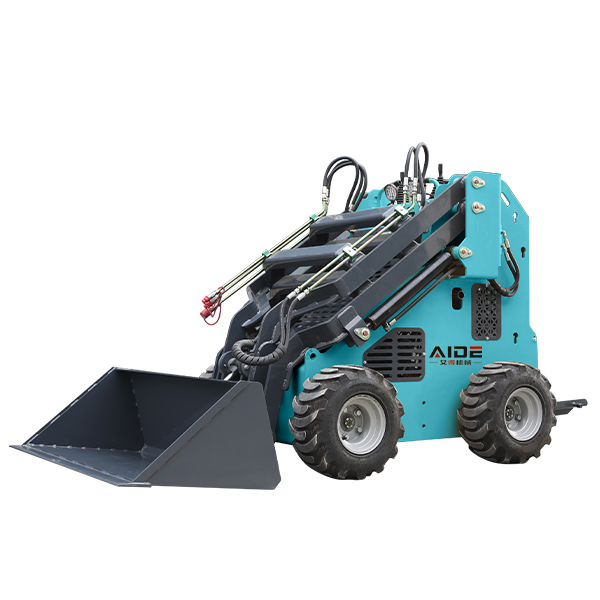
Plug-In Productivity: What Builders Need to Know Before Specifying an Electric Loader
Construction equipment electrification has moved from trade-show concept to serial production. Electric loaders — compact wheel or tracked machines powered entirely by battery packs — now compete directly with diesel counterparts on job sites across Europe and North America. For builders evaluating whether electric equipment fits their operations, understanding the technology's genuine capabilities — separate from manufacturer marketing claims — determines whether the investment delivers or disappoints.
Electric Loader Technology Fundamentals
Battery Systems and Energy Density Trade-offs
An electric loader replaces the internal combustion engine, fuel system, cooling package, and exhaust aftertreatment with a lithium-ion battery pack, electric drive motors, and a thermal management system. The battery pack is the defining component — its capacity (measured in kilowatt-hours) directly determines operating runtime, while its chemistry determines charge speed, cycle life, and cold-weather performance.
Lithium iron phosphate (LiFePO4) chemistry dominates construction equipment applications because it offers superior thermal stability — resisting thermal runaway at temperatures where other lithium chemistries risk combustion — and delivers 2,500–4,000 charge cycles before degrading to 80% of original capacity. The trade-off: LiFePO4 stores roughly 30% less energy per kilogram than nickel-manganese-cobalt (NMC) chemistry used in passenger electric vehicles. An electric loader battery pack providing 6 hours of runtime weighs approximately 600–900 kg — heavier than the diesel engine, fuel tank, and cooling system it replaces.
Electric drive motors deliver their critical advantage at low speeds: 100% of rated torque available from zero RPM. Diesel engines must reach 1,200–1,800 RPM before producing peak torque. The electric loader's instant torque characteristic translates to responsive bucket loading, quicker cycle times in stop-and-go material handling, and smoother control during precision grading operations.
Charging Infrastructure Requirements
Builders evaluating electric loader adoption must plan charging infrastructure alongside equipment procurement. A 40–60 kWh battery pack — typical for compact electric loaders — charges from 20% to 80% in approximately 2–3 hours on a 480V three-phase Level 3 DC fast charger, or 8–10 hours on a 240V Level 2 connection. Single-shift operations can charge overnight on Level 2 infrastructure at minimal installation cost. Multi-shift operations requiring mid-day charging need Level 3 capability — adding $10,000–25,000 in charging station and electrical service upgrade costs.
Construction Applications Where Electric Loaders Excel
Indoor and Underground Operations
The electric loader's defining operational advantage — zero exhaust emissions — creates value in enclosed environments where diesel exhaust mandates expensive mitigation. Hospital wing construction, occupied office renovations, tunnel work, mining operations, and food-processing facility expansion all require either diesel emission controls (ventilation, scrubbers, CO monitoring) or zero-emission equipment. Ventilation costs for diesel equipment in underground construction can exceed equipment operating costs — making the electric loader's purchase premium recoverable through ventilation savings alone within 12–18 months of continuous operation.
Jining Aide Machinery, with manufacturing capacity of 2,000 units monthly across compact loader and excavator product lines, has observed accelerating demand from European buyers specifically for enclosed-environment equipment solutions, driven by tightening indoor air quality regulations in EU member states.
Noise-Regulated Urban Construction
Electric loaders operate at roughly 60–70 dBA compared to 85–95 dBA for diesel equivalents. This 20+ dBA difference translates to perceived loudness reduction of approximately 75% — the difference between a conversation and a shout. Urban construction projects facing nighttime noise ordinances, school-adjacent work, and hospital-zone restrictions benefit operationally: crews can work extended hours without noise complaints, compressing project schedules that would otherwise be constrained by permitted working hours.
Real-World Builder Experience
A general contractor renovating a 12-story occupied hospital in Sweden faced strict emission and noise restrictions during the two-year project. Running diesel compact loaders for interior demolition required temporary ventilation ducting costing approximately €2,800 per week, plus CO monitoring with automatic equipment shutdown thresholds. After replacing two diesel machines with battery-electric compact loaders, the contractor eliminated internal combustion emissions from the interior work zones entirely, removed ventilation ducting from the project budget, and gained the flexibility to operate during daytime patient hours — a restriction that previously limited interior demolition to nighttime shifts only. The electric loader purchase premium of approximately €18,000 per machine was recovered through 28 weeks of avoided ventilation costs.
Frequently Asked Questions
How long does an electric loader battery last per charge?
Compact electric loaders typically operate 4–8 hours per charge depending on workload intensity. Heavy digging and high-flow attachment use consume power faster than light material handling. Manufacturers provide runtime estimates at 60% load factor — buyers should evaluate based on their actual work profile rather than quoted maximums.
Can electric loaders run attachments that require high hydraulic flow?
Yes — electric loaders use electric-motor-driven hydraulic pumps that deliver full-rated flow independent of travel speed. High-flow attachments such as cold planers and mulchers draw more battery power but receive consistent hydraulic performance. Verify that the specific model's high-flow circuit meets the attachment's requirements.
Are electric loaders suitable for outdoor construction in rain?
Electric loaders meet IP65 or IP67 water-ingress protection ratings on battery packs and electrical connections, making them suitable for rain operation and wash-down cleaning. Submersion — such as driving through deep standing water — should be avoided as with any construction equipment.
What is the expected service life of an electric loader?
Electric loader drivetrains typically outlast diesel equivalents because electric motors have one moving part versus hundreds in a diesel engine. Battery packs maintain 80% capacity for 2,500+ cycles — 7–10 years of single-shift operation. The primary long-term replacement cost is the battery pack, currently declining at 8–12% annually.
Do electric loaders require special operator training?
Operation is similar to diesel loaders with two differences: regenerative braking that slows the machine when the accelerator is released, and battery management display monitoring. Most operators adapt within one to two shifts. Some jurisdictions require high-voltage electrical safety awareness training for personnel working near charging infrastructure.
How do electric loader purchase costs compare to diesel?
Electric loaders carry a 25–40% purchase premium over equivalent diesel models. The premium is offset by lower energy costs (60–70% less per hour), reduced maintenance (no engine oil, filters, DPF), and — in indoor applications — eliminated ventilation costs. Payback periods range from 2–5 years depending on application and energy prices.